Between the Lines: A Calm Parking Plan for a Wide-Bodied Macan
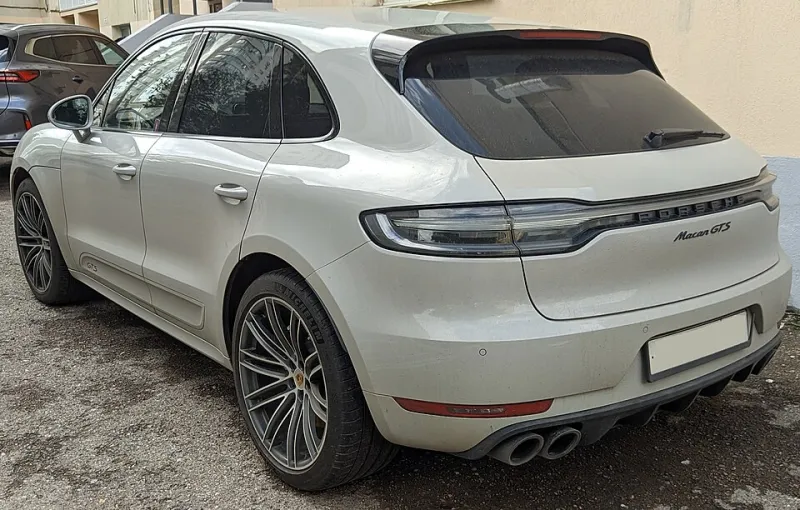
Photo: Kidfly182, CC BY 4.0, via Wikimedia Commons
There’s a particular kind of silence that settles over a British car park when a Macan eases into a bay that was clearly designed for a supermini. The driver stops. The passenger inhales. Somewhere behind you, a trolley clatters. This is not the moment to rely on hope, a beeping sensor and a brisk prayer.
Parking a wide car in tight UK spaces is a skill, but it is not a mystery. It is mostly maths, a little humility and a routine you repeat until it feels boring. Boring is good. Boring means no kerb rash, no door dings and no explaining a scuffed alloy to your other half.
First, the honest maths
A Macan is about 1,923 mm wide without mirrors and roughly 2,098 mm with them out. A standard UK supermarket bay might be 2.4 m wide; older multi-storey bays can be tighter, and some are closer to 2.3 m. That sounds generous until you do the sums. At 2.4 m, you have about 477 mm of spare width in total — around 24 cm per side before mirrors. Fold the mirrors and you have a fighting chance. Leave them out and you are essentially negotiating with millimetres.
So the first rule is simple: fold the mirrors before you commit to a tight row. The second is to treat bay markings as guidance, not decoration. If the car is straddling a line, you have not parked — you have made a statement. Aim to be centred, or deliberately offset towards a kerb or wall where it gives you a protected flank.
What the cameras can and cannot see
Modern Macans are well equipped with parking aids, and they are genuinely useful. They are also not magic. Ultrasonic sensors are good at catching walls and other cars, but they can miss low kerbs, kerbstones that taper away, bollards and the sort of ankle-height obstruction that enjoys alloy wheels for lunch. Cameras help, but wide-angle lenses bend the truth at the edges. A reversing camera is a guide, not a referee.
Before you trust the screen, clean the lenses. British weather means a reversing camera can be wearing a misty little overcoat by the time you reach the shops. Then use the old-fashioned stuff: mirrors, a shoulder check and a slow approach. If the sensors start a continuous wail, stop. Get out and look. Nobody in the history of parking has regretted a second opinion.
Choose your bay like you mean it
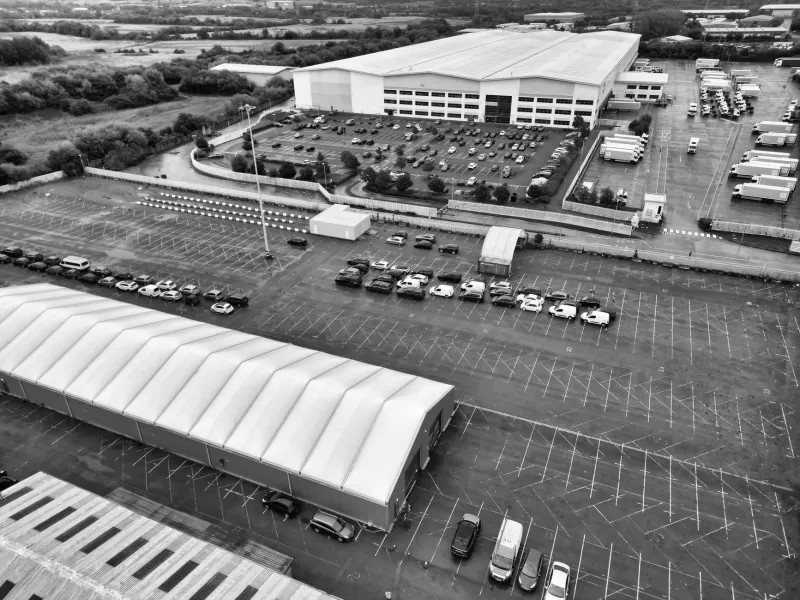
Not all bays are equal. An end bay with a kerb or wall on one side gives you a protected flank and usually a little more room to open a door. A parent-and-child bay is wider for a reason — use it only if you are eligible, not because your Macan identifies as a small van. Avoid parking next to a car that is already over the line, and give trolley bays a wide berth unless you fancy a dent with your shopping.
At the beach or a country park, look at the surface before the lines. Gravel, grass and soft ground can look firm in July and turn into a bog by October. Park on hard standing where possible, keep out of the tide’s way and do not spin the wheels to prove a point. A Macan has useful traction, but it is not a tractor.
The reverse-in habit
Reversing into a bay feels awkward at first and sensible forever after. You approach with a better view of the space, you can line up using the mirrors and you leave nose-first when it is time to go. In a busy car park, that forward exit is worth its weight in calm. If your Macan has a dipping passenger mirror or a kerb-view camera, use it. Approach slowly, keep the wheel straight until the rear is committed, then make one clean sweep rather than a series of embarrassed shuffles.
Multi-storeys: read the room
Multi-storeys are where British parking gets properly architectural. Check the height bar before you enter — a standard Macan is around 1.62 m tall, but roof bars, a roof box or a panoramic sunroof can change the conversation. Take ramps gently, watch for low kerbs on the corners and avoid turning a spiral ramp into a single-move manoeuvre if the width is tight. If the exit barrier is closer than it looks, stop and fold the mirrors.
The same applies at meet-ups. A pub car park full of Macans looks brilliant, but it works best when everyone arrives early, follows the marshal and leaves a little breathing room between cars. A convoy is not a crowd. Park with enough space to open a door, take a photo and walk away without performing a three-point turn over someone’s foot.
A calm parking checklist
- Fold the mirrors before entering a tight row.
- Check the bay width and your car’s width — do not guess.
- Choose an end bay or a protected flank where possible.
- Reverse in if the space allows; it makes leaving easier.
- Clean the camera lenses and trust your eyes over the screen.
- If the sensors protest, stop and look.
- Leave extra room on the driver’s side if you can.
- At the beach, check the surface and the tide, not just the lines.
- At a meet-up, arrive early, follow instructions and leave gaps.
Parking a Macan in Britain is never going to be as relaxing as a quiet B-road blast, but it does not have to be a grim little drama. Slow down, do the maths, fold the mirrors and give yourself one extra look before you walk away. Your alloys will thank you. Your door panels will thank you. And the next driver circling the row will quietly appreciate that you managed to park between the lines.