Grit, Grip and Glow Plugs: Getting Your Macan Through a British Winter
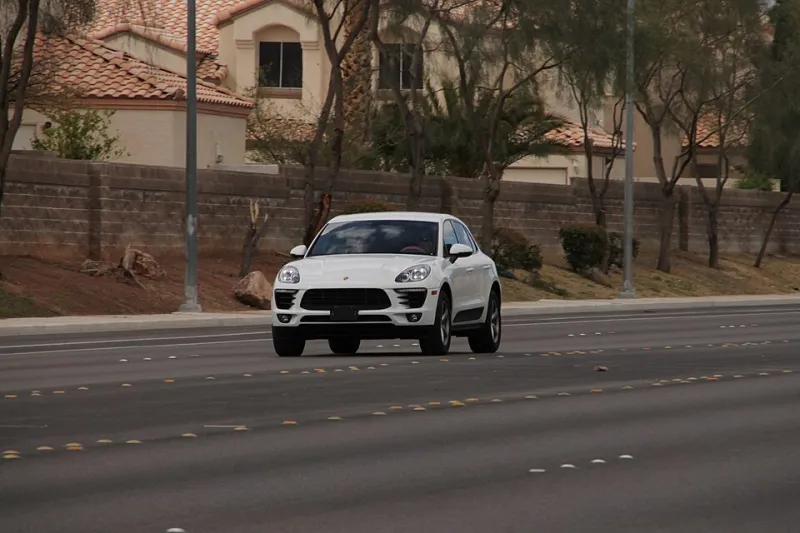
Photo: Kidfly182, CC BY 4.0, via Wikimedia Commons
There is a specific kind of British winter that seems engineered to test a car. A fortnight of drizzle, one hard frost, then six weeks of gritters working double shifts while the thermometer swings between minus four and nine degrees. A Macan handles all of that far better than most cars on the road — but 'handles it' and 'comes out the other side looking untouched' are two different things. Below is how we would prep one for the 2026/27 cold season.
Battery first, everything else second
Ask any recovery driver what fills their winter call-outs and the answer is the same: a flat 12V battery. Modern Macans are packed with kit that keeps drawing current when parked — dash cams, trackers, the alarm, the keyless entry system listening for a fob that is sitting on a hallway table three metres away. Add short trips with the heated seats and rear screen on, and the alternator never gets a proper chance to top things up.
If your car is four years old or more and still on its original battery, get it tested rather than waiting for the first genuinely freezing morning. A Porsche Centre will run a health check in minutes, and honestly any decent independent can do the same. Keyless entry fobs are worth a mention too — storing them in a signal-blocking pouch cuts unnecessary wake-ups. On the Macan Electric the high-voltage pack is a different proposition entirely, but there is still a small 12V battery doing the same job, so do not ignore it.
The tyre question nobody agrees on
British winters are marginal, which is why this debate never ends. A full winter tyre is superb on a genuinely cold, wet road and transformative in the two or three days of snow we might get. An all-season tyre is the pragmatic middle ground and increasingly popular with owners who cannot be bothered with a second set of wheels. Summer rubber — especially on a 21-inch wheel with a low profile — is the option that looks best and copes worst once the temperature drops below about seven degrees.
Whatever you run, tread depth matters more than badge. Three millimetres is the point at which most of us would replace, and four millimetres is a safer line for a car this heavy. Pressures need checking monthly through the winter: a ten-degree drop in ambient temperature can cost you roughly one psi, and a Macan running under-inflated on cold rubber feels vague and chews through shoulders. Smaller wheels with proper winter tyres will outperform big wheels with summer tyres every single time — no exceptions.
Salt is the quiet enemy
The gritter is not attacking your paintwork personally, but it is doing damage all the same. The areas that suffer first on a Macan are the rear wheel arches, the leading edge of the sills, the underside of the tailgate and anything behind the wheels where spray collects. A proper underbody rinse every couple of weeks through the worst of it is worth more than any single expensive treatment.
A pH-neutral shampoo and a mitt will do the job, and a decent wax or ceramic coating makes the weekly wash considerably quicker. If you have had paint protection film fitted, check the edges for lifting — grit gets underneath and turns a small bubble into a scruffy line. Expect surface rust on brake discs after a wet night; it is normal and clears after a gentle mile or two. What you should not ignore is a grinding noise or a car that pulls under braking, which points to something more serious than overnight oxidation.
Pre-conditioning and a warm cabin
This is where modern Macan ownership genuinely improves a winter morning. On the Macan Electric, setting a departure timer while the car is still plugged in means the cabin and battery are both at temperature before you unplug — which protects range as well as your fingers. Use it. It is the single best feature of electric ownership in January.
On petrol models, the heated seats, heated steering wheel and heated screen do the heavy lifting. Resist the urge to leave the car idling on the drive to warm up: it is slow, it is wasteful and it is not brilliant for the engine. Start it, let the oil circulate for a few seconds, and drive gently for the first couple of miles instead.
Visibility, lights and the small stuff
Screen wash is the most overlooked fluid on any car. Buy the concentrated winter version and mix it properly rather than topping up a summer bottle with water. Check the wiper blades now — a streaky blade in December is miserable. Give the headlights a wipe, particularly if you have the matrix LED setup, since a film of road salt scatters the beam badly. Headlight washers, where fitted, are worth testing before you need them.
Book the service before the queue forms
Porsche Centres fill up fast from late November. A winter check covering battery health, brake fluid, coolant strength, tyre condition and a look underneath for anything corroding is quick and cheap compared with the alternative. If you run a second set of winter wheels, ask about storage while you are there.
A weekend checklist you can actually do
- Tyre pressures set cold, tread measured, spare or sealant kit checked
- Battery tested, fob batteries replaced if the range feels short
- Winter screen wash, oil and coolant levels confirmed
- Wipers, all lights, horn and washers working
- Boot kit: scraper, de-icer, torch, blanket, hi-vis, phone cable, a decent pair of gloves
- Underbody rinse booked, or done at home with a hose rather than a jet aimed at the brakes
None of this is glamorous, and none of it takes a whole day. But a Macan that has been prepped properly will start first time on the coldest morning of the year, stop cleanly on a salted B-road, and still look like a £70,000 car when the spring wash comes round. That is worth an afternoon in November.