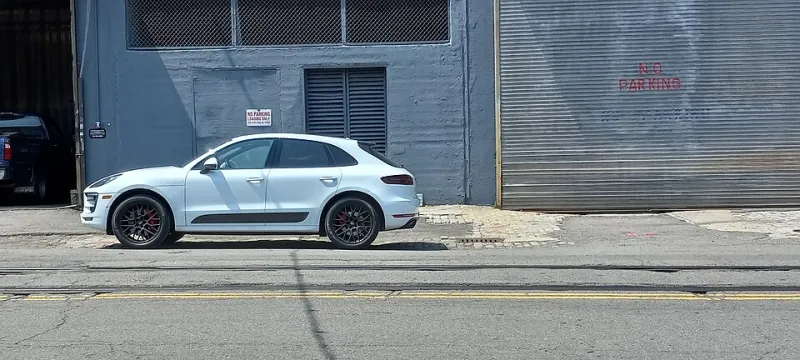
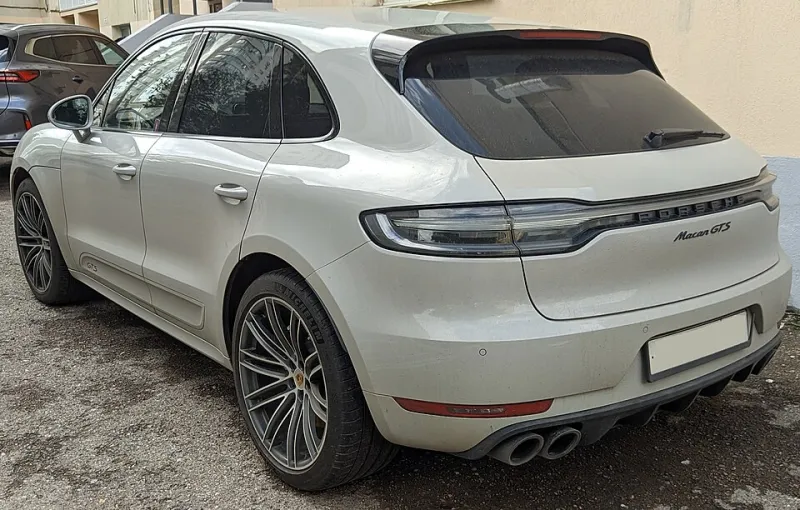
Band on the Run: What Your Macan Really Costs in Road Tax, Year by Year
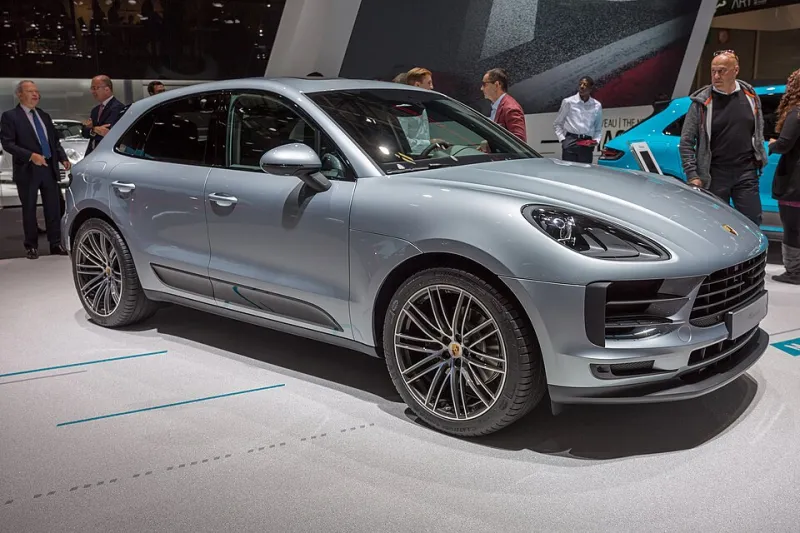
Photo: Matti Blume, CC BY-SA 4.0, via Wikimedia Commons
Road tax is one of those bills that turns up with no drama and no explanation. You get a reminder, you pay it, you carry on. But ask a room full of Macan owners what they actually hand over each year and you'll get four different answers — because the number depends on when the car was registered, what came out of the options list, and whether there's a plug where the engine used to be.
So let's untangle it. No politics, no lectures on road maintenance funding, just the mechanics of VED as it applies to a Porsche Macan in 2026.
Why the sticker price tells you almost nothing
The price you negotiate in the showroom and the figure the DVLA uses to tax your car are two different animals. What matters for VED is the list price — the published P11D value before any discount, and crucially including the options.
That distinction catches people out. A Macan ordered with a generous spec can tip over the £40,000 threshold purely on paint, wheels, a panoramic roof and a decent stereo. The discount you negotiated doesn't rescue you. The taxman is looking at the list, not your haggling skills.
The first year: showroom tax
Every new car pays a higher rate for its first twelve months, and for petrol Macans that figure is driven entirely by CO2. There's no flat fee here — the bands climb steeply.
A Macan S or GTS, with a CO2 figure somewhere in the low-to-mid 200s, sits high up the table. Expect a first-year bill in the region of £1,900 to £2,700 depending on the exact emissions number on that particular car. It's a real sum, and it's baked into the on-the-road price, which is why it often goes unnoticed until someone points at the invoice.
This is the single biggest reason to check the CO2 figure on the specific car you're looking at rather than the model in general. Wheel size alone can nudge it, and a few grams can move you a band.
Years two to six: the £40,000 question
After the first anniversary, things settle. Most petrol Macans move to the standard rate — around £195 a year — and stay there.
Except for the expensive car supplement, which is the bit that stings. Cars with a list price over £40,000 pay an extra charge, currently in the region of £425, on top of the standard rate for the second to sixth years of the car's life. That's five renewals, not one, and it doesn't taper. It applies whether the car cost £41,000 or £141,000.
Which is why the arithmetic for a new Macan looks roughly like this: a hefty first-year hit, then five years of standard rate plus supplement, then — on the sixth birthday — a sudden drop to the plain standard rate.
That sixth birthday is genuinely a milestone. Owners who've had the car from new often notice the reminder letter suddenly looking friendlier, and it's a nice moment to redirect the saving somewhere useful, like tyres.
Electric Macans: the rules caught up
Zero-emission cars used to swan about paying nothing. That ended for cars registered from April 2025 onwards, when electric vehicles were brought into the VED system properly.
In practice, a Macan Electric pays a token first-year rate — a tenner or so — and then the standard rate, exactly like a petrol car. And yes, the expensive car supplement applies too, because even the entry-level electric Macan comfortably clears £40,000 on list price. Buyers who assumed the electric route meant a free tax disc have had a mildly irritating surprise.
It's still cheap relative to the petrol equivalent in year one. Just don't budget zero.
If your Macan was registered before April 2017
Here's where the used market splits. Early Macans — the 2014 to early-2017 cars — were registered under the old CO2 band system, which was never fully harmonised with the current one. Those cars pay according to their original emissions band, and the rates have been largely frozen for years.
In practice that means a pre-2017 Macan S might cost you somewhere between £250 and £350 a year, no supplement, forever. Some are cheaper to tax than a brand-new one. It's one of the quiet advantages of buying early, and it's worth checking before you assume newer equals cheaper.
The options list is a tax document
If you take one thing away, take this: when you're speccing a new Macan, the options you choose can push the car over the £40,000 line and trigger five years of supplement. That's over £2,000 across the period, for a car that might have been under the threshold without the wheels.
It's not a reason to order a miserable car. It is a reason to know where the line sits before you get carried away in the configurator.
A quick checklist before you commit
- Pull the CO2 figure from the V5C or the original spec, not from memory.
- Confirm the list price including options — that's the number that matters.
- Check the first registration date. Before or after April 2017 changes everything.
- If buying used, remember the supplement belongs to the car, not the seller. You inherit whatever's left of the five years.
- Run the registration through the gov.uk vehicle enquiry service — it'll tell you the current rate and when it's due.
- Rates are re-set each April, so treat any figure here as a guide and check the live table before you budget.
Paying it without the January wince
You can pay annually, or by monthly direct debit across twelve instalments for a small surcharge. Most owners I know have switched to the monthly option purely because a tenner-and-a-bit leaving the account each month is easier to absorb than a lump sum landing in the same week as the insurance renewal.
And if the car comes off the road for a while — a winter lay-up, a long repair — SORN it properly. Just remember the continuous insurance rules still apply, and un-SORNing before you drive it again isn't optional.
Road tax will never be the most thrilling part of Macan ownership. But knowing the shape of the bill — big in year one, supplemented for five, plain sailing after six — takes the surprise out of it, and surprises are the only genuinely expensive part of running a Porsche.